PROPULSION TECHNOLOGY
Technology & Propellants
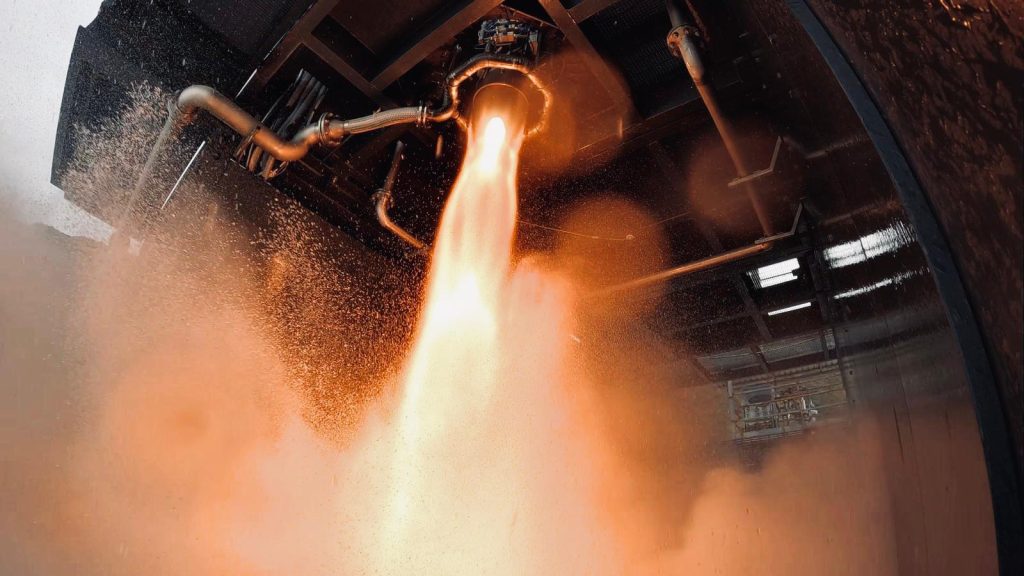
Every second of flight comes down to chemistry. Here's what we burn, why we chose it, and how it's turned into thrust, cooling, and a safe autonomous landing.
Every second of flight comes down to chemistry. Here's what we burn, why we chose it, and how it's turned into thrust, cooling, and a safe autonomous landing.
Tank size, engine cycle, cooling method, ground handling, cost per flight — almost every design decision on a Talisha rocket traces back to one choice made early: what we burn. We fly Bio-Kerosene and Liquid Oxygen because, for a reusable vehicle flown often, it's the combination that lets every other system stay simple.
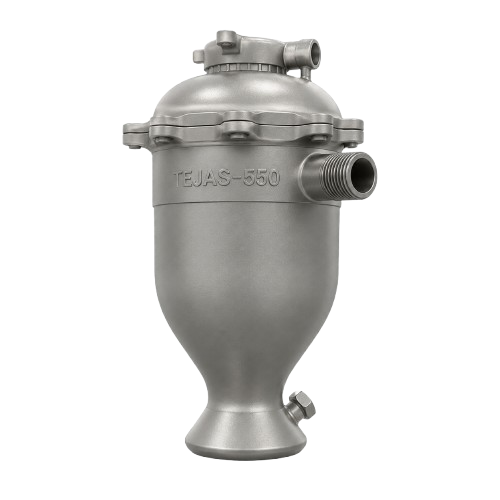
Our engines burn a refined bio-kerosene fuel — chemically equivalent to standard RP-1 — against sub-cooled liquid oxygen (LOX). It's dense, storable at close to room temperature, and produces a clean, sootable-but-manageable burn that's easy to throttle and gimbal — exactly what a vehicle that has to land itself needs.
| Fuel | Bio-Kerosene (RP-1 equivalent) |
| Oxidizer | Sub-cooled Liquid Oxygen (LOX) |
| Mixture Ratio (O:F) | ~2.56 : 1 |
| Specific Impulse (Sea Level) | ~282 s |
| Combustion Temperature | ~3,400 °C |
| Storage | Fuel storable at ambient; LOX loaded pre-flight |
| Propellant | Specific Impulse | Storability | Reusability Fit | Cost |
|---|---|---|---|---|
| RP-1 / LOX ← Talisha | Moderate–High | Fuel ambient, LOX cryogenic | Excellent — easy to throttle & relight | Low |
| Methane / LOX | High | Both cryogenic | Good — cleaner burn, harder ground ops | Moderate |
| Hypergolic (MMH/N2O4) | Moderate | Both storable, toxic | Poor for reuse — corrosive residue | High |
| Solid Propellant | Low–Moderate | Fully storable | None — cannot throttle or relight | Low |
RP-1/LOX gives us most of methane's performance with far simpler ground fueling, and unlike hypergolics or solids, it throttles and relights cleanly — a hard requirement for an engine that has to hover and land itself.

Before a drop of bio-kerosene reaches the injector, it's routed through channels machined into the combustion chamber wall — regenerative cooling that keeps chamber metal temperatures survivable against a 3,400°C flame, while preheating the fuel for more efficient combustion.
Our bio-kerosene is refined from waste-oil and non-food biomass feedstocks to the same specification as conventional RP-1 — so engines built for RP-1 need no redesign, while the fuel supply chain carries a meaningfully lower carbon footprint.
Loading propellant is one of the highest-risk parts of any launch. Ours is automated end-to-end, monitored by the same software stack that flies the vehicle.
RP-1/LOX gets our reusable fleet flying now. In parallel, our propulsion team — working with our partners at IIT Kharagpur — is developing a methane/LOX engine for a future heavy-lift vehicle, targeting the coking-free, easier-reuse burn that methane offers once ground infrastructure for it is in place.
See The Launch Program