Talisha Aerospace designs, builds, and flies a family of reusable launch vehicles — from suborbital test flight to orbital deployment — backed by in-house propulsion, avionics, and mission software.
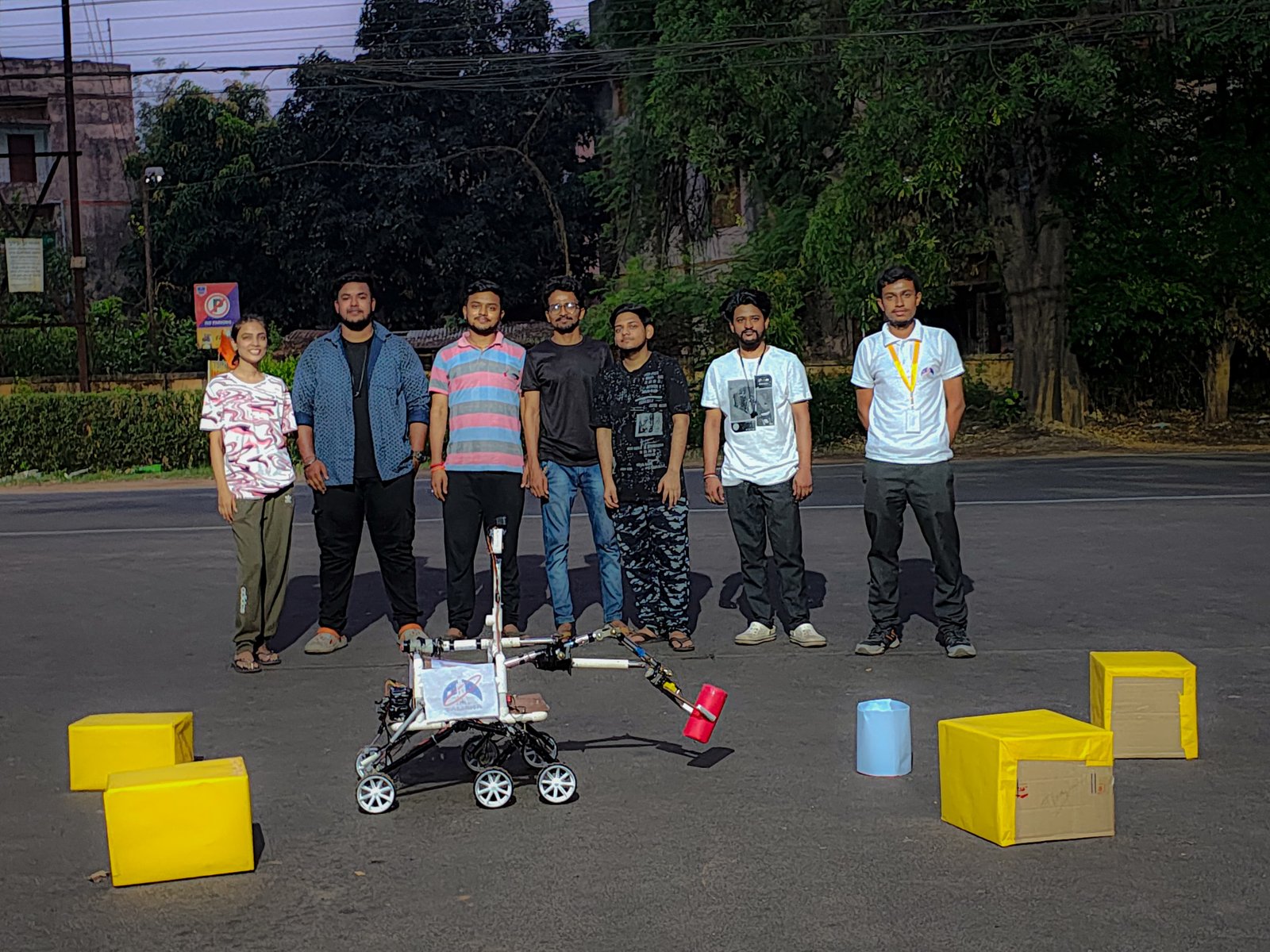
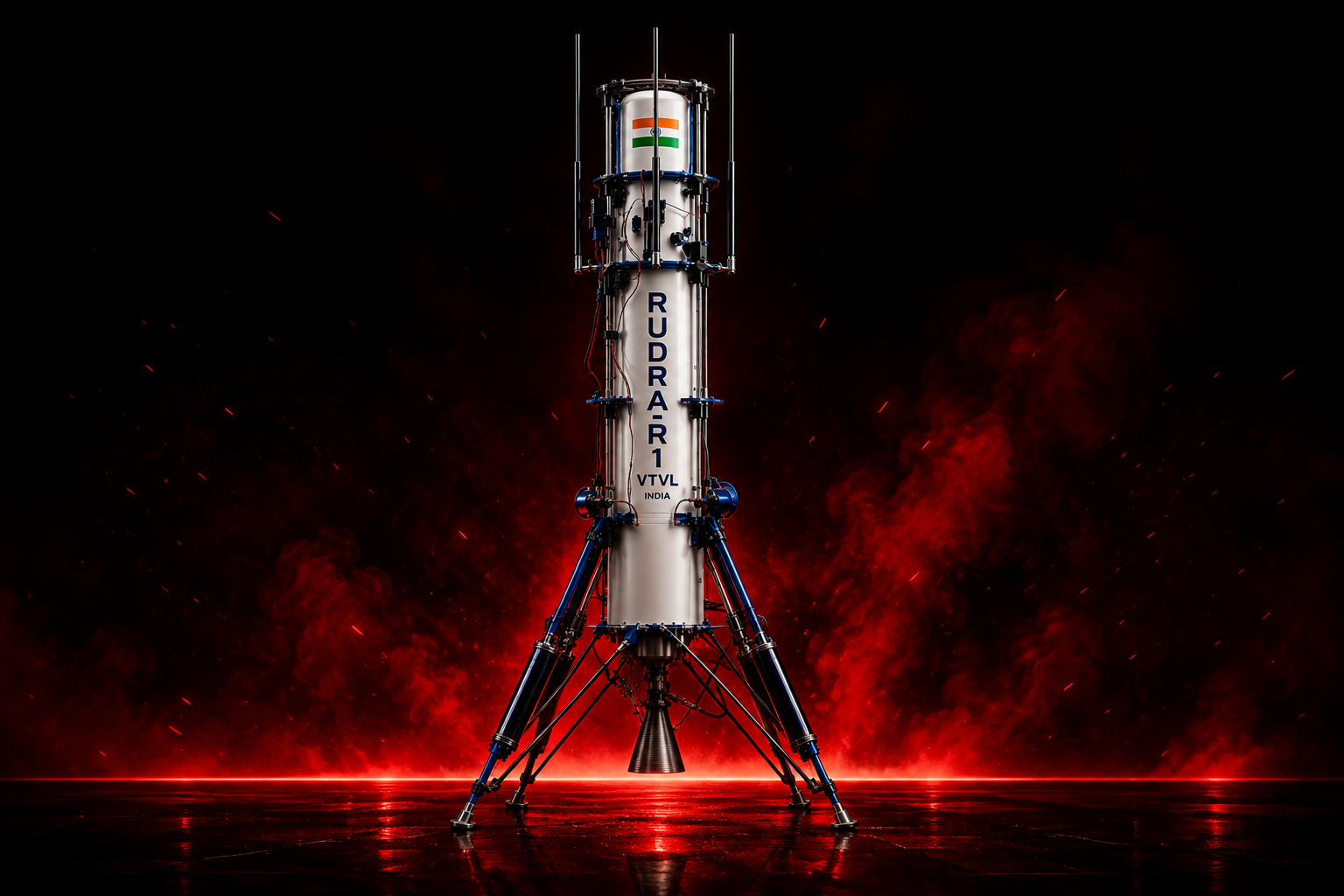
See The FleetRUDRA-R1 is our first reusable prototype — a vertical take-off, vertical landing (VTVL) demonstrator built to validate the guidance, navigation, and propulsive-landing software that will fly on every future Talisha vehicle. It's the vehicle currently flying at our home test range, and the one every later design builds on.
View Full Specs
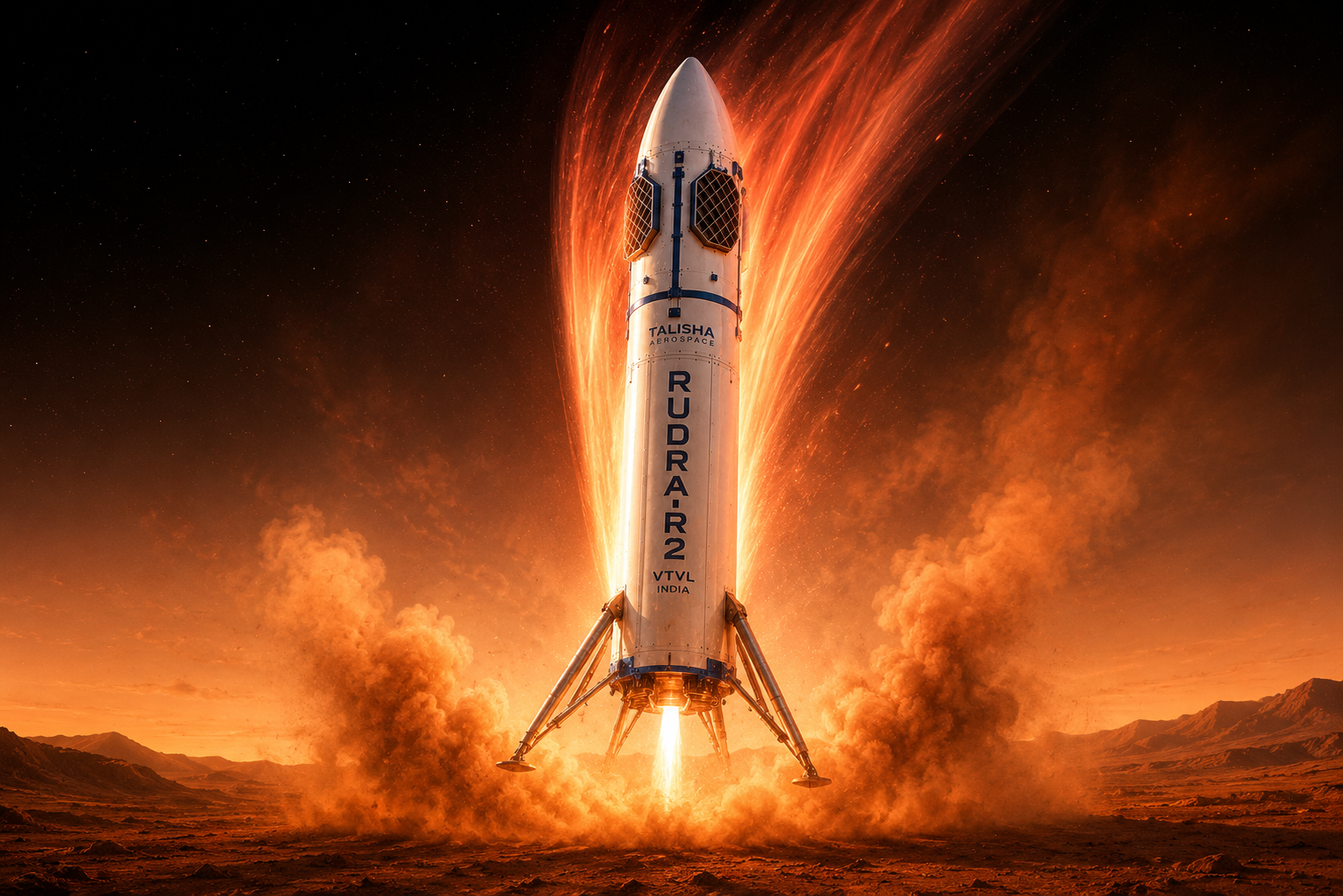
RUDRA-R2 takes everything proven on RUDRA-R1 and scales it up: a full-size single-stage rocket built to climb past 100 km — the Karman line — and fly itself back down to an autonomous landing on the pad it launched from. It's the next milestone on the Mission Pragati roadmap, in development now.
View Full Specs
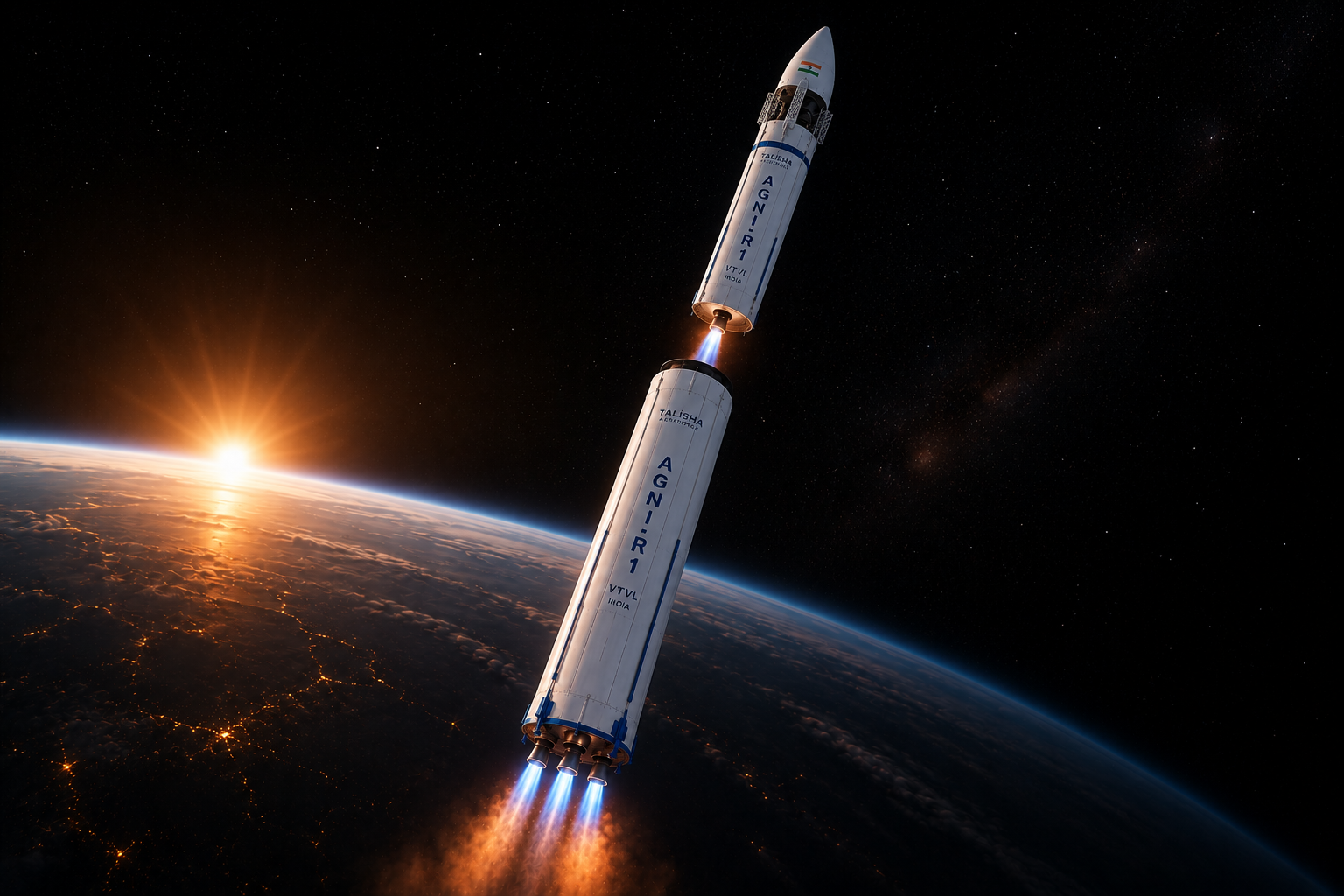
AGNI-R1 is our advanced reusable orbital launch vehicle, built for small satellite deployment on top of everything RUDRA-R1 and RUDRA-R2 prove out. A two-stage design with an autonomous first-stage landing keeps turnaround time and cost down between missions.
View Full Specs
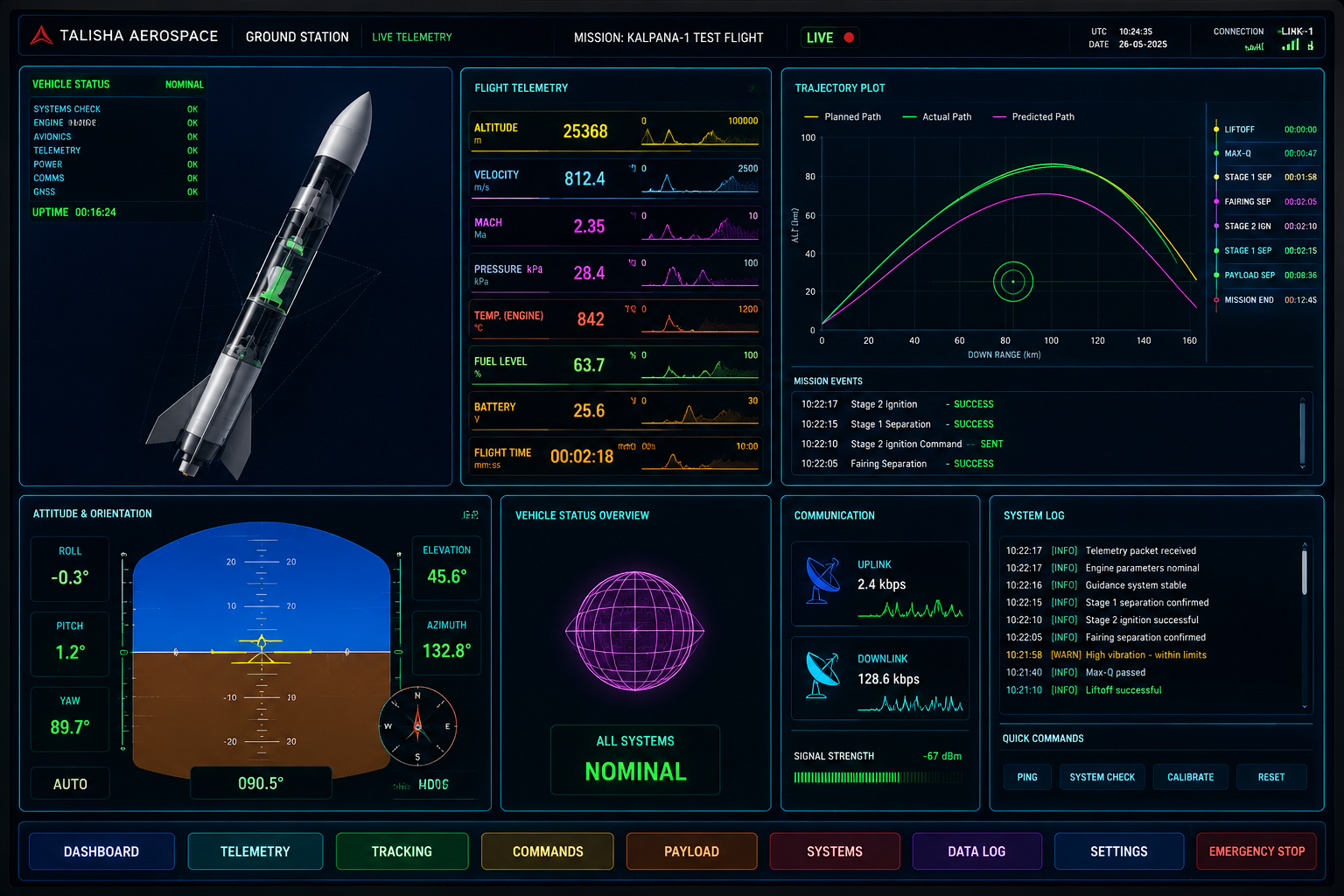
Every launch is commanded, monitored, and analyzed through Talisha Mission OS — our own flight software stack, built in-house and flown on every vehicle in the fleet.
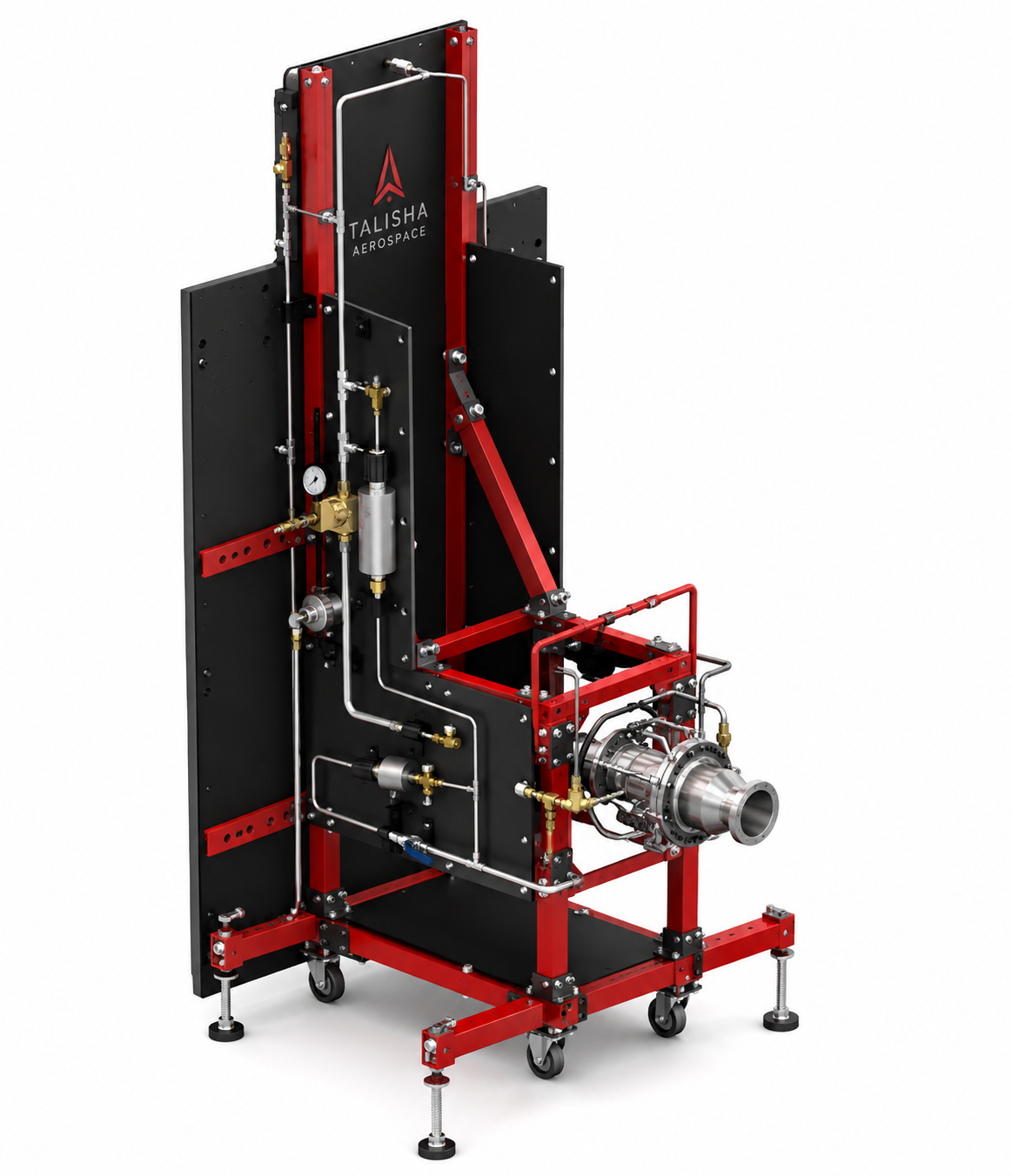
Our testing infrastructure combines computer-based rocket data systems, static fire testing, and a dedicated ground station to validate vehicle performance, telemetry, and flight-readiness before launch.
A computer-based test system collects and analyzes rocket performance data, including sensors, telemetry, temperatures, pressures, and other critical parameters during testing.
Our static fire test frame securely holds the rocket or engine during controlled ground tests, allowing us to measure performance and validate the propulsion system before flight.
The ground station provides a centralized interface for monitoring rocket telemetry, tracking live test data, and managing communication between the vehicle and the ground team.
Yes. We can tailor orbit, integration hardware, ground support, and mission timeline to your payload's requirements, with either self-managed or Talisha-managed mission operations.
Rideshare slots typically close 9–12 months before launch; dedicated missions can be scheduled 6–18 months out depending on orbit and integration complexity.
AGNI-R1 delivers up to 500 kg to sun-synchronous or mid-inclination low Earth orbit; the heavy configuration extends this to roughly 4,200 kg.
Every mission includes pad, propellant, range safety, telemetry downlink, and access to Talisha Mission OS for real-time tracking through separation.
Yes — our reusable first stage and in-house engine production are built specifically to support recurring, multi-launch constellation contracts at a fixed cadence.
Our mission engineering team is ready to help scope your launch.